As homeowners, we are no strangers to focusing on energy efficiency when we make inspections and do repairs. But there is another inspection that we should all be performing but few of us do. Similar to a black mold inspection, testing for the risk exposure potential due to radon gas is critical. By installing a radon test unit, you can protect your family.
There exists many visible and barely visible quiet and potential assassins in all of our homes today. Many homeowners are quite responsible about contracting for a mold evaluation after their home floods. Hurricanes Katrina and Harvey were wake-up calls. As for myself, I am still re-building and it is going to go on for a while.
However, not all homeowners are aware about the necessity of interior air quality testing for radon gas.
Exactly What is Radon Gas?
Radon gas is actually a radioactive, invisible toxic vapor resulting from a natural process, the radioactive breakdown of the uranium isotope. In short, this vapor is an intruder but not one that a home security system can help with.
Most folks think that uranium is just present in things like nuclear medicine and nuclear weapon production. But that would be incorrect.
Why? Because it’s also present in rocks, water, soil, and air. As a result, it’s also present in homes. Lung cancer studies have demonstrated that radon gas is can contribute to cancer, and similar to asbestos in home building materials, the risk is especially high for smokers, both traditional and now they tell us, vapers (or is that vapors?). I can’t keep it straight.
What Method of Testing Can You Use to See if this Carcinogenic Gas is Present?
Actually, Radon testing is available in 2 forms -- The first is short-term testing and the second is long-term testing. If you elect to go short-term, the gas testing equipment is set up and stays in your home for a period of 2 - 90 days.
Well, which one should you use? The US government likes to recommend starting with the short-term type. It might be in charcoal canister form, an alpha track, an electric ion chamber, or a similar device.
There are also 2 ways to get the testing done, with a DIY kit or hire a qualified tester. Personally, I would go with the kit. Usually "testers" want to sell you something; just look at the exposes of "water quality" testers. Not to say that they are all bad, but do you know? No.
After the testing results come back, a second short-term test will usually be required in the case that the first test result comes in at 4 pCi/L or higher.
How about long-term radon air quality testing? This is used when the test period exceeds a 90-day period. Why would you use this one? This is usually used when the homeowner wants to get a bit more comprehensive idea of what the home’s level is on a year-round basis. Always a good idea if you live in radon-prone areas. These are mostly in the northern states but consult with your local authorities to determine your risk.
This radon test equipment is also available in alpha track form or as an electric device.
What are Realistic Radon Test Result Ranges?
You can expect interior gas test results to come in at 1.3 pCi/L on the average. The exterior average is realistically 0.4 pCi/L. The eventual goal of the U.S. Congress is for the general population to lower the home’s interior radon gas level to be equivalent with the exterior average. But that is a government program. Right? What could go wrong?
This may sound like a pie-in-the-sky scenario with current remedial efforts, but many of the homes that are currently way above the average should be able to be reduced down to 2 pCi/L; a solid step in the right direction.
Sources of Household Radon and How You Can Achieve Radon Safety
There are 2 primary ways that radon gas can enter your home. Through tap water and via the soil; soil being the method that carries a higher risk. So if you have a basement or crawl space, unlike here in South Texas, there you go.
Your risk of exposure from your water supply comes via 2 routes; inhalation and ingestion.
But here’s an interesting observation; Surface water is generally not much associated with radon entering the home but should not be disregarded; it should still be tested.
Chances are far more probable that it will enter in ground water originating from a well on the residence property or some similar source. Point-of-use water treatment units will go far in abating the problem.
Install a Radon Fan
One excellent method of removing radon gas from your home is to install a radon mitigation fan. This is a kind of basement ventilation system, which is handy if your home is configured that way. When combined with your vent pipe system, it will exhaust gas from the lowest points in your home.
It then vents it to the outside of your home. This arrangement is known as a soil suction radon reduction system. That’s a mouthful.
Testing as a Help in Selling a Home
Are you planning to list your home with a realtor in the near future? If so, it would be a feather in your cap to employ radon test equipment right away to determine the home’s risk factor. Then be sure to document your results.
This same logic goes for a documented mold inspection too. As time goes on, more prospective home buyers are looking for verification of testing indoor air quality for radon gas. Do you have any experience with this testing procedure? Please share it with our readers in the comment section below! If the information in this article has helped you I would consider it a favor if you passed it on to a friend or coworker. Thank’s for visiting!
Did you find this article helpful? Please consider supporting this free site with a small donation! We rely on our info-seeking readers rather than a paywall to keep the lights on and the info flowing.
About the Author:
Kelly R. Smith was a commercial carpenter for 20 years before returning to night school at the University of Houston where he earned a Bachelor’s Degree in Computer Science. After working at NASA for a few years, he went on to develop software for the transportation and financial and energy trading industries. He has been writing, in one capacity or another, since he could hold a pencil. As a freelance writer now, he specializes in producing articles and blog content for a variety of clients. His personal blog is at I Can Fix Up My Home Blog where he muses on many different topics.













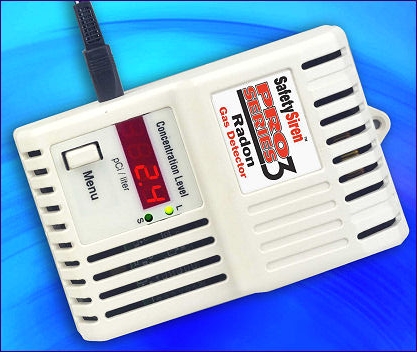

 There are also 2 ways to get the testing done, with a DIY kit or hire a qualified tester. Personally, I would go with the kit. Usually "testers" want to sell you something; just look at the exposes of "water quality" testers. Not to say that they are all bad, but do you know? No.
 Your risk of exposure from your water supply comes via 2 routes; inhalation and ingestion.

 Kelly R. Smith was a commercial carpenter for 20 years before returning to night school at the University of Houston where he earned a Bachelor’s Degree in Computer Science. After working at NASA for a few years, he went on to develop software for the transportation and financial and energy trading industries. He has been writing, in one capacity or another, since he could hold a pencil. As a freelance writer now, he specializes in producing articles and blog content for a variety of clients. His personal blog is at