For testing circuit boards or electronic troubleshooting, a multimeter is the test equipment you’re going to want. You might have heard it called a volt ohm meter. The analog style needs the meter calibrated.
When you’re doing electrical troubleshooting, some of the process is testing circuitry using a multimeter. It’s often called a multitester as well, and this device performs a variety of types of diagnostic testing.
Now they’re so common and there are so many companies that produce and market them that any hobbyist or homeowner should keep one in the handy tool box.
Analog or Digital?
You’ll find that there are two basic styles, the original analog multimeter, and then the fancier
modern models like the
Fluke 101 Basic Digital Multimeter Pocket Portable Meter Equipment Industrial. The many different terms that you hear them referred to points out that in fact, it’s built for performing a variety of different jobs; and all packed into a small package.
This article covers these two types of testing equipment, and will also walk you through two of the more common and helpful types of electronic circuit diagnostic tests.
Let’s Start with the Analog Multimeter
The analog multimeter is extremely easy to recognize. It sports a big square or rectangular window gauge displaying a variety of scales.
A thin needle is centered at the bottom of the window which sweeps from the left hand side to giving a numeric reading of the result of the test you’re conducting.
The analog meter, unlike the digital, has to have a meter calibration prior to using it. Start by connecting the black cable to the negative, or common, jack on your meter. Next, insert the red cable into the positive jack. Now, touch the metal tips of the probes together.
The basic idea here is for the gauge’s needle to scoot across to the right hand side and center at ZERO. If this doesn’t happen, just turn the adjustment dial. If you discover that this does not help, try changing the battery/s.
Next, the Digital Multimeter
Your basic digital multitester is not as Buck Rogers science fiction-looking as the analog version; imagine a more contemporary appearance. The numbers in the read-out display looks a bit like a digital clock.
Whatever style of multitester you buy, either one will get you through electrical troubleshooting diagnostic tests. Let’s look at those.
Using a Meter as a Continuity Tester
A continuity test is probably the most common electrical routine performed with the meter. Continuity simply means that there is no break in any section of an electrical circuit; the power flows from one point to another point as it was engineered to.
When operating an analog model, first set your selector control knob to RX1. Next touch one probe to point A and the other to point B. If you observe the needle swinging to zero ohms, then you have continuity. However, if it stays pegged to infinite ohms, there is no connectivity.
If you’re using a digital meter, set your function control on OHMS and move your range control down to the meter’s lowest setting. Use the probes as explained above. If your unit makes a beeping sound or your digital display does not go to infinity, you have continuity.
Using Your Meter as a Voltage Tester
When you’re testing an electric motor that’s not hooked up to a circuit board, or a transformer with an analog unit, your selector control needs to be set to 50 ACV. (Or DCV if you're testing a thermocouple or a motor hooked up to a circuit board.) Be sure to turn off all power on the unit to be tested.
For this test, make use of the cables tipped with alligator clips and clip them onto the terminals. Then turn on the power and your multitester needle will peg on the voltage.
If you’re making this test with a digital multimeter, set your range control to 30 and your function control to ATV. As above, turn off all power to the transformer, connect your alligator clips, turn on the power, and the power will be displayed.
I hope this article on testing residential electrical circuits with a multimeter has helped resolve any electrical issues you are having. If so, I would appreciate it if you would share it with a friend. We are all in this together.
About the author:
Kelly was a commercial carpenter for 20 years before returning to night school at the University of Houston where he earned a Bachelor’s Degree in Computer Science. After working at NASA for a few years, he went on to develop software for the transportation and financial and energy trading industries. He has been writing, in one capacity or another, since he could hold a pencil. As a freelance writer now, he specializes in producing articles and blog content for a variety of clients. His personal blog is at I Can Fix Up My Home Blog where he muses on many different topics.












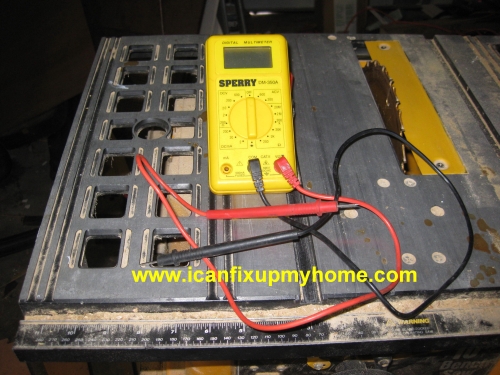
 . The many different terms that you hear them referred to points out that in fact, it’s built for performing a variety of different jobs; and all packed into a small package.
 Kelly was a commercial carpenter for 20 years before returning to night school at the University of Houston where he earned a Bachelor’s Degree in Computer Science. After working at NASA for a few years, he went on to develop software for the transportation and financial and energy trading industries. He has been writing, in one capacity or another, since he could hold a pencil. As a freelance writer now, he specializes in producing articles and blog content for a variety of clients. His personal blog is at