This is the first in a DIY concrete series. It explains slab layout, digging the footing, building a concrete form, pouring concrete, and screeding the slab. The second will explain troweling and finishing the concrete slab. The third explains the different formulations of premixed concrete.
The information contained in this article will get the job done effectively but your local building code may vary, depending on soil composition, moisture, weather fluctuations, etc. As with any other construction project, always consult with your local building code and pull permits and schedule inspections as required.
Depending on the scope of the project and your abilities this can be either a moderate DIY project or something to be contracted out. If you decide to have a pro do the job, be sure that you follow the proper steps when hiring a contractor. Doing so will save you a lot of potential grief as well as your investment.
The first thing the homeowner should consider when building a patio, carport, outside storage shed, or a freestanding patio cover is the concrete slab. Pouring a concrete slab need not be difficult with the right planning. Since this is a DIY project, the concrete slab cost is reasonable.
If the slab is to be a foundation for framing a house, it must be smooth and level.
Consider Electric and Plumbing Utilities
If there is any plumbing involved with the slab, consider it in the concrete slab design. The same goes for any electrical conduit associated with the slab. Failure to prepare for these concerns means the concrete slab will need to be trenched and patched, a tedious process not to be reckoned with!
Tools and Material List
These are the tools and materials you will need for this project:
Hammer
Wooden stakes
Mason’s string
1” X 4” lumber for the concrete form
2” X 4” stud or aluminum screed
Shovel
Steel Wire Mesh for smaller projects, rebar for larger projects
Side cutting pliers; Klein is a good brand name
Tie wire
Building code recommended vapor barrier material (if required in your area, always check first)
4' Level or laser level
Lay Out Your Slab Location
The first things to consider are concrete slab design, the location, and its size. Drive stakes at the corners and connect the stakes with string. This is the the slab’s boundary, the batter boards. Ensure that it’s square with the 3-4-5 method of squaring. Make any adjustments needed.
Prepare the Form’s Location
Dig up the grass inside the area defined by the string line. Level the dirt. Trench the footing around the perimeter. It should be a shovel width wide and six inches in depth. The purpose of the slab's footing is to lend strength and stability to the slab.
Some locales require that a vapor barrier be placed under on the dirt prior to pouring the slab. Inquire with the regional building code to determine whether this needs to be done.
Steel mesh is now laid in the footing (rebar for larger projects; consult the local building code). Support it with applicable components to ensure that it lays within the finished slab, not just laying at the bottom. Wire it together with the pliers at the intersections using tie wire. Using the mesh is analogous to using rebar in road construction. It strengthens the footing where the pressure is greatest.
Building the Concrete Form
A concrete driveway form
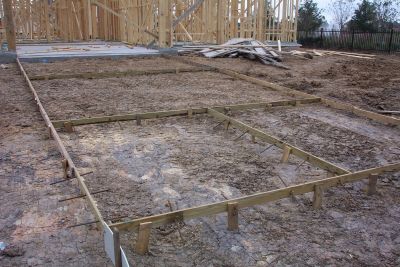
The concrete slab needs a wooden form to keep the concrete in place during the drying and finishing process. The 1” X 4” boards form the form’s sides. The string line ensures the form is square.
Nail the form together for stability purposes. Drive the stakes in every sixteen inches outside the form and contacting the 1” X 4” boards. This contains the pressure of the wet concrete and keeps the sides of the slab straight and true.
It’s important to keep the slab level in all directions. Adjust the sides of the form to get this right. Nail the stakes to the sides of the form securely.
Pouring the Concrete into the Form
Home improvement outlets and tool rental facilities rent out portable cement mixers. This is the way to go for any patio or small shed project. Once you get to something the size of a carport slab, it’s time to think about calling in a concrete mixer truck.
Position the cement mixer’s chute to pour the concrete into one end of the form. Begin the pouring and use the shovel to push the concrete and work it into all areas.
Screeding the Concrete Form
After filling the form, level it with the edge of the 2” X 4” or the aluminum screed tool. Push and pull it in a sawing motion across the form’s top starting at one end and working down to the other end. This process is called the ”screed”.
The next article in the do it yourself concrete slab series explains finishing the slab. It revisits the screed and goes on to explain the darby, edging and grooving, and floating and troweling the concrete slab. You don't want the concrete to cure too fast. Depending on your situation you may need to cover the concrete with burlap and hose it down.
After finishing the slab, stay off of it for a couple of days with anything heavy, and at least five days for a driveway. After that you remove the form That's all there is to pouring a concrete slab.
Did you find this article helpful? Thanks for supporting this free site with a small donation!
About the Author:
Kelly R. Smith was a commercial carpenter for 20 years before returning to night school at the University of Houston where he earned a Bachelor’s Degree in Computer Science. After working at NASA for a few years, he went on to develop software for the transportation and financial and energy trading industries. He has been writing, in one capacity or another, since he could hold a pencil. As a freelance writer now, he specializes in producing articles and blog content for a variety of clients. His personal blog is at I Can Fix Up My Home Blog where he muses on many different topics.













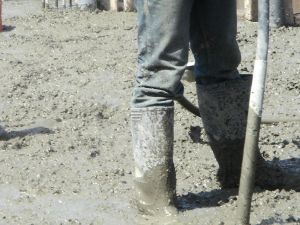


 After filling the form, level it with the edge of the 2” X 4” or the aluminum screed tool. Push and pull it in a sawing motion across the form’s top starting at one end and working down to the other end. This process is called the ”screed”.

 Kelly R. Smith was a commercial carpenter for 20 years before returning to night school at the University of Houston where he earned a Bachelor’s Degree in Computer Science. After working at NASA for a few years, he went on to develop software for the transportation and financial and energy trading industries. He has been writing, in one capacity or another, since he could hold a pencil. As a freelance writer now, he specializes in producing articles and blog content for a variety of clients. His personal blog is at